
The Northern Edge of the Tree That Crackles: the Japanese Holly Community of Junggye-ri, Buan
Place · Junggye-ri, Byeonsan-myeon, Buan-gun, Jeonbuk State
Visit this tree
Japanese Holly Community of Junggye-ri, Buan
Junggye-ri, Byeonsan-myeon, Buan-gun, Jeonbuk State
When you visit, look from outside the fence, and don't break branches or climb the tree. Trees in villages are part of people's everyday lives.
At a glance
- Tree
- Japanese Holly Community of Junggye-ri, Buan
- Species
- Japanese Holly (Ilex crenata)
- Age · era
- Designated a Natural Monument in 1962
Story
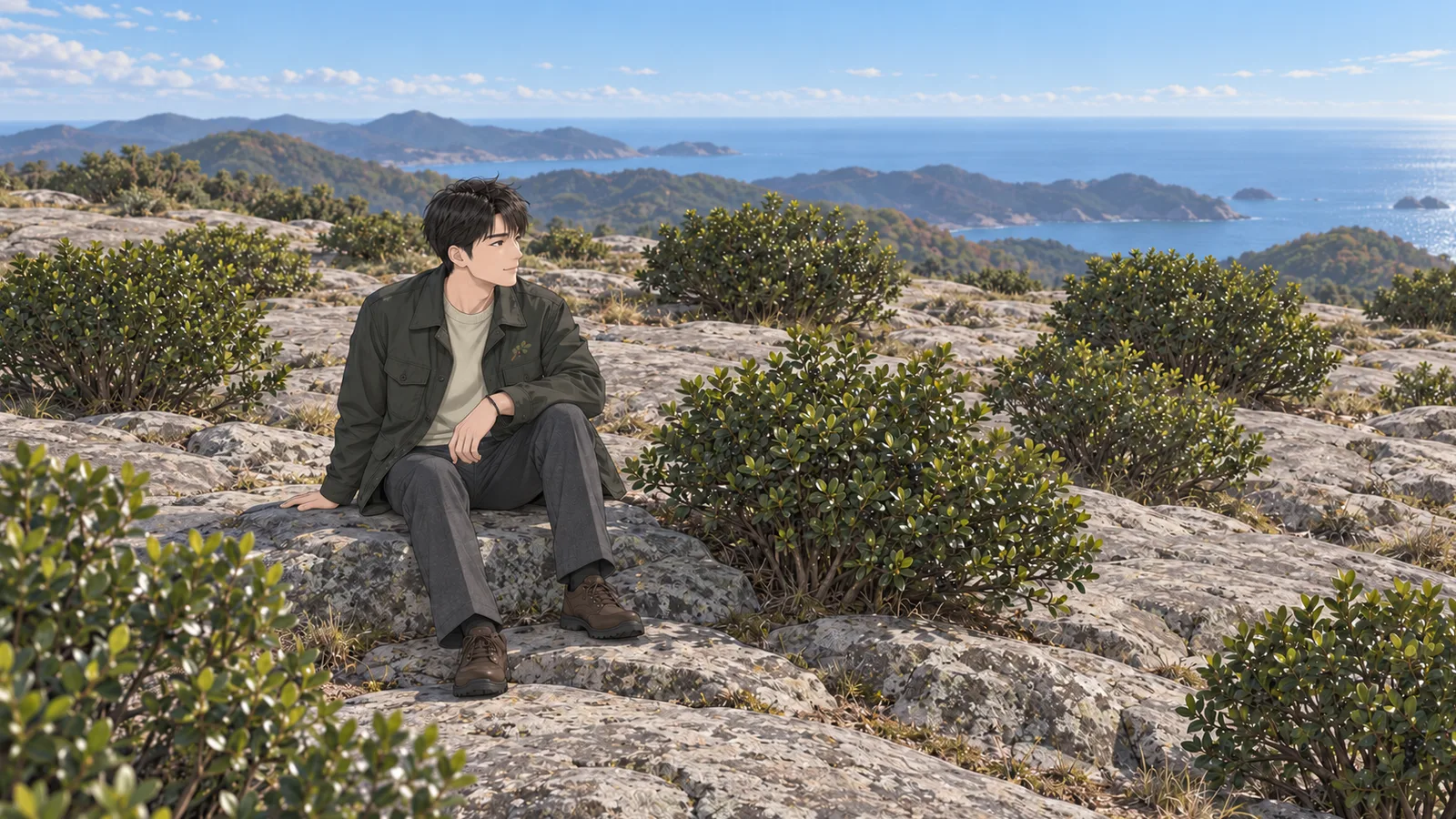
The Encyclopedia of Korean Culture and the Korea Heritage Service both record that this tree's Korean name, kkwangkkwang-namu, comes from the "kkwang-kkwang" sound its leaves make as they burn. According to the Korea Heritage Service, the Japanese holly grows on the Byeonsan Peninsula and on Geojedo, Bogildo and Jejudo islands, among other places, and the community on a fairly flat spot high on the mountain at Junggye-ri, Byeonsan-myeon, Buan-gun, Jeonbuk is, within that range, the northernmost area where the Japanese holly can grow. The Korea Heritage Service writes that according to past records about 700 trees once formed a large community, but only about 200 now remain (the Encyclopedia of Korean Culture also records about 200 trees). The spot is also called Jamdu (Silkworm's Head) and is said to be an auspicious site in pungsu (feng shui). Recognized also as a xerophytic plant community that grows on rocks and does well even in dry places, it is designated and protected as a Natural Monument (designated 7 December 1962, according to the Korea Heritage Service).
Sources — 4 records and legends
Records are facts written in the sources. Legends are stories handed down over time. Sources are in Korean.
Record
- From the Encyclopedia of Korean Culture: the Encyclopedia of Korean Culture records that the Korean name kkwangkkwang-namu was given because the leaves make a "kkwang-kkwang" sound as they burn. It is an evergreen shrub with small leaves set densely along the branches, found on the Byeonsan Peninsula and on Geojedo, Bogildo and Jejudo islands, and because it takes pruning well it is widely used as a garden tree, for hedges and for bonsai.
한국민족문화대백과사전 · checked 2026-09-30
- The Korea Heritage Service explains that the Japanese Holly Community of Junggye-ri, Buan once numbered about 700 trees according to past records but now has only about 200 left, and that it is designated and protected as a Natural Monument for its value as the northernmost area where the Japanese holly can grow and as a xerophytic plant community growing on rocks. The designation date is registered as 7 December 1962.
국가유산청 국가유산 공개API — 천연기념물 부안 중계리 꽝꽝나무군락 설명 · checked 2026-10-04
- The Encyclopedia of Korean Culture records that the Japanese holly community at Junggye-ri, Byeonsan-myeon, Buan-gun was designated a Natural Monument on 3 December 1962, and that about 200 trees grow scattered across a logged area.
한국민족문화대백과사전 '부안 중계리 꽝꽝나무 군락' · checked 2026-10-04
Legend
- The Korea Heritage Service explains that the Japanese holly's Korean name comes from the "kkwang-kkwang" sound its leaves make as they burn, and passes on that the place where the community grows is also called Jamdu (Silkworm's Head) and is said to be an auspicious site in pungsu (feng shui).
국가유산청 국가유산 공개API — 천연기념물 부안 중계리 꽝꽝나무군락 설명 · checked 2026-10-04
Spot a mistake?Tell usRead in Korean
Original posts (in Korean)
Get to know this tree — Japanese Holly Ilex crenata
Small glossy alternate leaves with dark glandular dots underneath; black fruits on female plants.
More about the Japanese Holly →While you're there — named trees nearby
- White Forsythia Habitat of BuanByeonsan-myeon, Buan-gun, Jeollabuk-do · Natural Monument · about 1.3 km away
- Protected Japanese Zelkova · Buan-gun, Jeonbuk StateProtected Tree · about 500 years · about 4.4 km away
- Protected Japanese Zelkova · Buan-gun, Jeonbuk StateProtected Tree · about 350 years · about 4.8 km away
- Protected Korean Willow · Jeongeup-si, Jeonbuk StateProtected Tree · about 466 years · about 4.9 km away