
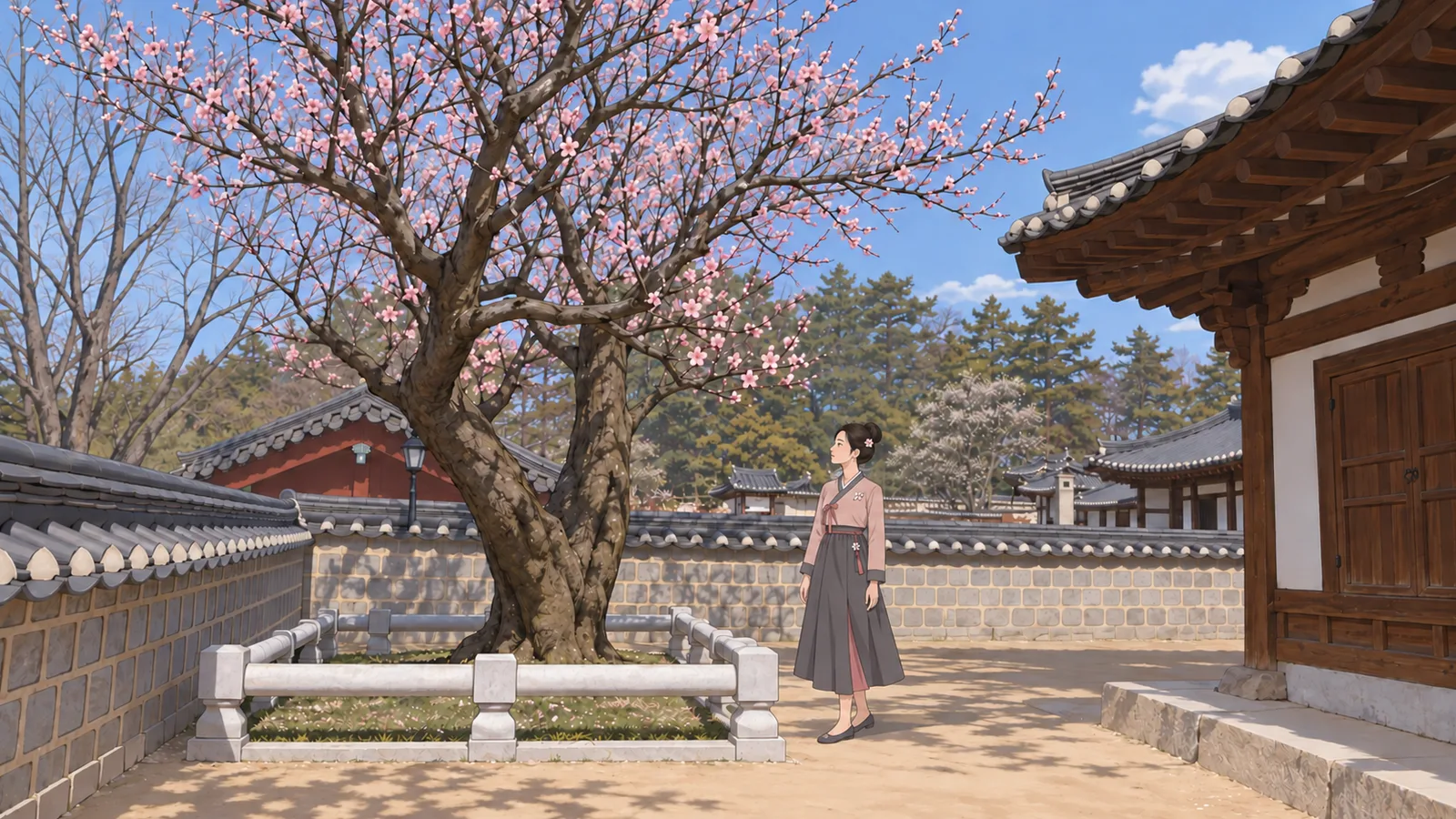
The Plum Tree Tended by Shin Saimdang and Yulgok: The Yulgok Plum Tree of Ojukheon
Place · Ojukheon, 24 Yulgok-ro 3139beon-gil (Jukheon-dong), Gangneung-si, Gangwon-do
Visit this tree
Japanese Apricot Tree Yulgokmae of Ojukheon, Gangneung
At a glance
- Tree
- Yulgok Plum Tree of Ojukheon
- Age · era
- Around 1400 (planting tradition), mid-Joseon (Saimdang and Yulgok), designated a Natural Monument in 2007
Story
According to the Korea Heritage Service portal, the Yulgok Plum Tree of Ojukheon in Gangneung is said to have been planted around 1400, when Ojukheon was built (the signboard says Choe Chi-un built Ojukheon around the 22nd year of King Sejong, 1440, and planted it in the rear garden of the annex), and it is said to have been tended by Shin Saimdang and Yulgok themselves. Shin Saimdang painted many plum blossom pictures, such as the "old plum" and "ink plum" paintings, and loved plum blossoms so much that she named her eldest daughter Maechang (梅窓, "plum window"). The Yulgok plum is a type of red plum with pale pink flowers, and it was designated a Natural Monument on 8 October 2007. The Gobul Plum Tree of Baekyangsa Temple in Jangseong, designated the same day, originally stood in the front yard of the old main hall; when the temple was moved and rebuilt after the great flood of 1864, one red plum and one white plum were replanted, and only the red plum remains now. In 1947, when Master Manam formed the "Gobul Chongnim", it began to be called the "Gobul plum" for resembling the dignity of Gobul. The Encyclopedia of Korean Culture records that because the plum blossoms through the cold, it was widely cultivated as an emblem of the scholarly spirit that does not yield to injustice.
Sources — 4 records and legends
Records are facts written in the sources. Legends are stories handed down over time. Sources are in Korean.
Record
- The Korea Heritage Service portal records that the Yulgok Plum Tree of Ojukheon in Gangneung was designated a Natural Monument on 8 October 2007, that Shin Saimdang painted many plum blossom pictures such as the old plum and ink plum paintings and loved plum blossoms so much that she named her eldest daughter Maechang, and that the Yulgok plum is a type of red plum with pale pink flowers.
국가유산청 국가유산포털 — 천연기념물 강릉 오죽헌 율곡매 (기본정보·국가유산 설명) · checked 2026-10-04
- The Korea Heritage Service portal explains that the Gobul Plum Tree of Baekyangsa Temple in Jangseong was designated on 8 October 2007, that several trees originally stood in the front yard of the old main hall, that when the temple was moved and rebuilt after the great flood of 1864 one red plum and one white plum were replanted so that only the red plum remains now, and that in 1947, when Master Manam formed the Gobul Chongnim, it began to be called the "Gobul plum" for resembling the dignity of Gobul.
국가유산청 국가유산포털 — 천연기념물 장성 백양사 고불매 (기본정보·개별안내판 설명) · checked 2026-10-04
Legend
- From the Encyclopedia of Korean Culture, "Maesil-namu (Plum Tree)": the plum tree has been cherished as a tree that blooms in early spring, before the cold has fully gone, announcing the arrival of spring, and because it blooms through the cold, it was cultivated as an emblem of the scholarly spirit that does not yield to injustice and became a favorite subject of poems and paintings. In early Joseon, Kang Hui-an classified the plum as a first-grade plant, together with pine, bamboo and lotus, in the "Nine Grades of Flowering Plants" of his Yanghwa Soro, and Fan Chengda of China called it the foremost of all flowers in his Meipu (Plum Manual).
한국민족문화대백과사전 '매실나무' · checked 2026-09-30
- The Korea Heritage Service portal signboard explanation says that Choe Chi-un built Ojukheon around the 22nd year of King Sejong (1440) and planted this tree in the rear garden of the annex, and that it is said to have been tended by Shin Saimdang and Yulgok themselves; the heritage description says it was planted around 1400 when Ojukheon was built, and that Saimdang and Yulgok are said to have tended it.
국가유산청 국가유산포털 — 천연기념물 강릉 오죽헌 율곡매 (국가유산 설명·개별안내판 설명) · checked 2026-10-04
Spot a mistake?Tell usRead in Korean