
The Spring-Blossom Mountain Cherry That Became the Tripitaka Koreana Woodblocks
Place · Janggyeong Panjeon, Haeinsa Temple, 122 Haeinsa-gil, Gaya-myeon, Hapcheon-gun, Gyeongsangnam-do
Visit this tree
Mountain Cherry Woodblocks of Haeinsa Temple (Tripitaka Koreana)
At a glance
- Tree
- Mountain Cherry Woodblocks of Haeinsa Temple (Tripitaka Koreana)
- Age · era
- Carved 1237-1248 in Goryeo, moved to Haeinsa in 1398
Story
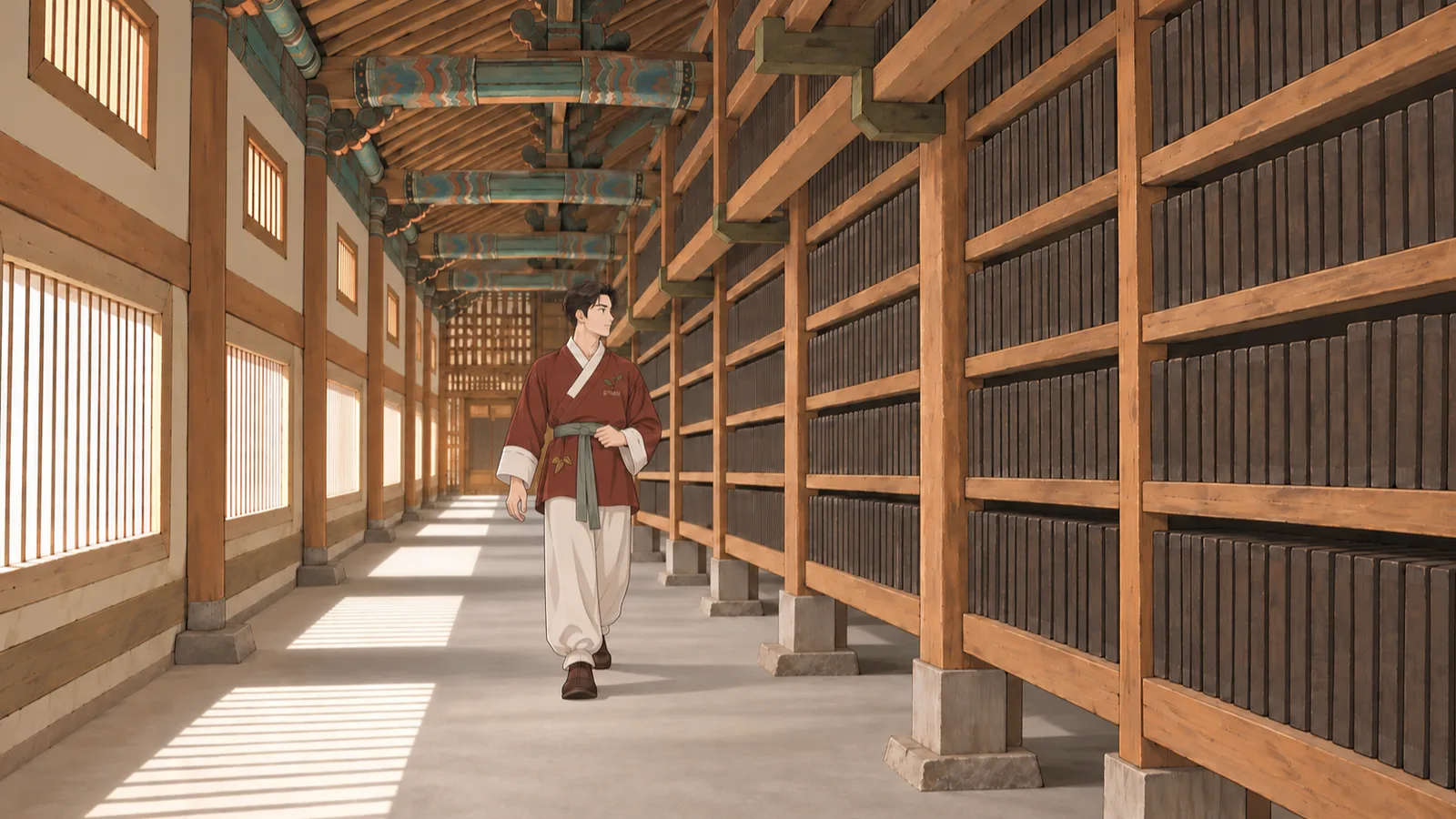
According to the Korea Heritage Service portal, after the Chojo Tripitaka carved in the reign of King Hyeonjong of Goryeo was burned in the Mongol invasion of 1232 (the 19th year of King Gojong), the Tripitaka Koreana (Jaejo Daejanggyeong, also called Palman Daejanggyeong) was carved again by setting up the Daejang Dogam (Tripitaka Directorate) in hope of repelling the Mongol army by the power of Buddhism, and the carving was handled by the branch directorate in Namhae, Gyeongsangnam-do. The Encyclopedia of Korean Culture records that mountain cherry was the main material of the blocks, with easy-to-carve woods such as wild pear and maple also used. Each block is 24 cm tall, 68 to 78 cm wide, 2.5 to 3 cm thick and weighs about 3 kg; for preservation both faces were lacquered and metal plates were attached to the four corners. The blocks were moved from Ganghwa Island through Seonwonsa Temple to Haeinsa in May 1398 (the 7th year of King Taejo), and a survey in the Japanese colonial period counted 81,258 blocks, including ones re-carved in the Joseon period. The Tripitaka Koreana woodblocks were designated a National Treasure in 1962 and inscribed on the UNESCO Memory of the World Register in 2007.
Sources — 3 records and legends
Records are facts written in the sources. Legends are stories handed down over time. Sources are in Korean.
Record
- From the Encyclopedia of Korean Culture, "Tripitaka Koreana Woodblocks of Haeinsa Temple, Hapcheon": the material of the Tripitaka Koreana woodblocks of Haeinsa Temple, Hapcheon (Palman Daejanggyeong, carved 1237-1248), a National Treasure and UNESCO Memory of the World item, is recorded in the Encyclopedia's object information as "wood / mountain cherry, etc."
한국민족문화대백과사전 '합천 해인사 대장경판' · checked 2026-09-30
- The Encyclopedia of Korean Culture records that the Tripitaka Koreana woodblocks were designated a National Treasure in 1962, that the Janggyeong Panjeon was inscribed as a UNESCO World Heritage site in 1995 and the woodblocks on the Memory of the World Register in 2007, that Yi Gyu-bo's "Daejanggakpan Gunsin Gigomun" shows the background of the carving as an effort to repel the Mongol invasion by the power of Buddha, that mountain cherry is the main material of the blocks with easy-to-carve woods such as wild pear and maple also used, and that each block is 24 cm tall, 68 to 78 cm wide, 2.5 to 3 cm thick and about 3 kg, lacquered on both faces with metal plates on the four corners.
한국민족문화대백과사전 '합천 해인사 대장경판' (집필 1995 박상국, 최종수정 2026-04-15) · checked 2026-10-04
- The Korea Heritage Service portal explains that after the Chojo Tripitaka of King Hyeonjong's reign was burned in the Mongol invasion of 1232, the Tripitaka was carved again (Jaejo Daejanggyeong) by setting up the Daejang Dogam with the aim of repelling the Mongol army by the power of Buddhism, that the carving was handled by the branch directorate in Namhae, that the blocks were moved from the Daejanggyeong Panhall on Ganghwa Island through Seonwonsa Temple to Haeinsa in May 1398, that a survey in the Japanese colonial period counted 81,258 blocks including those re-carved in the Joseon period, and that they were inscribed on the Memory of the World Register in 2007.
국가유산청 국가유산포털 — 국보 합천 해인사 대장경판 (국가유산 설명) · checked 2026-10-04
Spot a mistake?Tell usRead in Korean