
The "Water Fir" Thought Extinct, and How It Came to Line a Damyang Road
Place · Metasequoia tree-lined road, Damyang-gun, Jeollanam-do (National Route 24, from Damyang-gun Office to Wonyul Junction in Geumseong-myeon)
Visit this tree
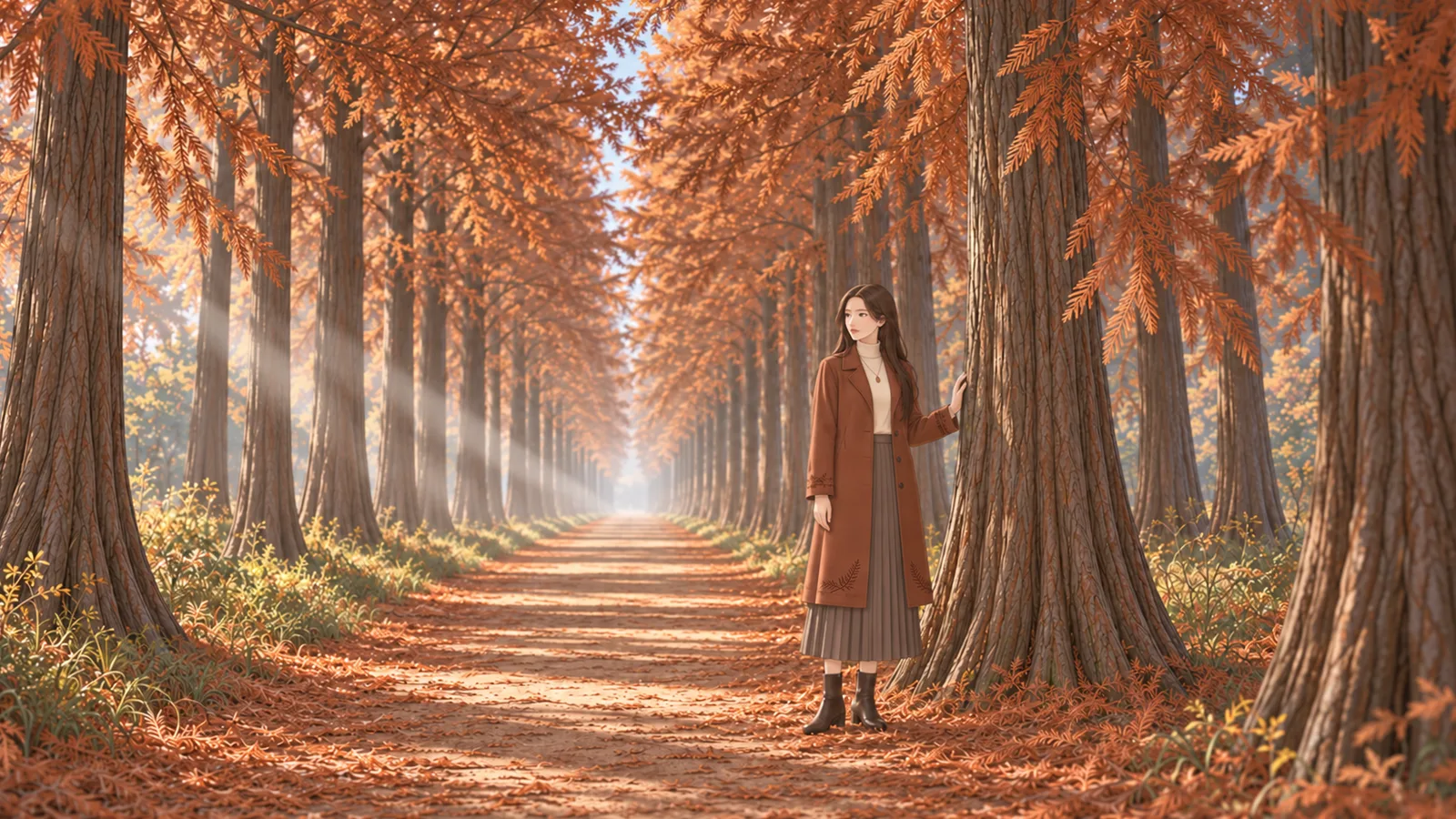
Damyang Metasequoia Road
At a glance
- Tree
- Damyang Metasequoia Road
- Age · era
- Discovered 1941, seeds distributed 1948, introduced to Korea in the 1950s (varies by source), planted in Damyang 1972, road-widening threats in 2000 and 2009, National Forest Cultural Asset 2015
Story
The Arnold Arboretum of Harvard University says the metasequoia (in English, Dawn Redwood) had generally been thought to have gone extinct millions of years ago. In the winter of 1941, Professor T. Kan of the National University's forestry department, on his way from Hubei to Sichuan, saw a large deciduous tree by the roadside at Mau-tao-chi in Wan County, which the locals called "shui-sa", or "water fir". The Missouri Botanical Garden records that the tree was known from the fossil record and that a wild specimen was discovered in 1941. In January and February 1948, seeds arrived at the Arnold Arboretum twice; after keeping some, the arboretum divided the rest into at least 600 packets and sent them to gardens, arboretums and universities around the world. In Korea, in 1972 Damyang-gun planted 1,300 five-year-old trees along a 5 km stretch of National Route 24 from the county office to Wonyul Junction in Geumseong-myeon, creating today's metasequoia road (Korea Tourism Organization). The Seoul Shinmun (2 October 2000) reported that the road was designated a model street-tree road by the Ministry of Home Affairs in the early 1970s, and that in 2000 the roadside trees along about 1 km from Namsan-ri to Hakdong-ri in Damyang-eup were threatened with loss by the Iksan Regional Construction and Management Administration's widening of the Gwangju-Sunchang road, but after residents' protests the trees slated for felling were cut from 178 to 64 along a stretch of about 200 m. The Hankook Ilbo (2018) sums up that the route was changed at that time to save 114 trees, and that when the Damyang-Sunchang road was widened to four lanes in 2009, the 37 trees slated for felling were reduced to 4 through consultation between residents and environmental groups. The tree columnist Ko Gyu-hong (2010) wrote that residents formed the "Citizens' Alliance to Save the Metasequoias" and protected the trees. The road won the Grand Prize in the street-forest category in 2002 and the top prize in the "100 Beautiful Roads of Korea" in 2006 (Kyunghyang Shinmun, 2015), and in 2015 became the first tree-lined road to be designated a National Forest Cultural Asset; the Korea Forest Service cited its significance as "the first tree-lined road in Korea made with seedlings produced in a nursery". In 2011, when Damyang-gun gave notice of an ordinance to charge admission for 1.8 km (470 trees) in front of Hakdong Village, the need for management clashed with objections to "making money off a walking path" (Seoul Shinmun). The route by which the tree reached Korea differs by source: the Damyang road signboard names Dr. Hyeon Sin-gyu, while a Chonnam National University signboard introduces one of the saplings brought from Japan by Jeong Ha-do in 1952 as the mother tree of this road (Hwang Ho-taek column). The film "May 18" (Hwaryeohan Hyuga) begins on this road (same column).
Sources — 12 records and legends
Records are facts written in the sources. Legends are stories handed down over time. Sources are in Korean.
Record
- From the Missouri Botanical Garden Plant Finder: the metasequoia was known from the fossil record as far back as 50 million years ago, but a living wild specimen was first discovered in 1941 near Modaoxi (磨刀溪) in China by the Chinese forester T. Kan. It is a rare case in which the process by which it came to be called a "living fossil" is preserved in institutional records.
미주리식물원(Missouri Botanical Garden) Plant Finder · checked 2026-09-30
- The Arnold Arboretum records that the metasequoia had generally been thought extinct for millions of years, that in the winter of 1941 Professor T. Kan saw a large deciduous tree called shui-sa (water fir) by locals by the roadside at Mau-tao-chi in Wan County, and that seeds arrived at the arboretum in January and February 1948 and were redistributed in at least 600 packets to gardens, arboretums and universities around the world.
하버드대 아놀드수목원(Arnold Arboretum) — The Living Fossil · checked 2026-10-04
- The Korea Tourism Organization introduces the Damyang metasequoia road as a road created in 1972 when Damyang-gun (under County Governor Kim Gi-hoe) planted 1,300 five-year-old trees along a 5 km stretch of National Route 24 from the county office to Wonyul Junction in Geumseong-myeon.
한국관광공사 대한민국 구석구석 — 담양 메타세쿼이아 가로수길 · checked 2026-10-04
- The Seoul Shinmun reported that in 2000 about 1 km of roadside trees from Namsan-ri to Hakdong-ri in Damyang-eup were threatened with loss by the Gwangju-Sunchang road widening of the Iksan Regional Construction and Management Administration (Ministry of Construction and Transportation), but after residents' protests the trees slated for felling were reduced from 178 to 64 along a stretch of about 200 m. The same article notes that the road was designated a model street-tree road by the Ministry of Home Affairs in the early 1970s.
서울신문 「[녹지를 가꾸자] 가로수길 조성·개선점(끝)」 2000-10-02 · checked 2026-10-10
- The Hankook Ilbo reports that in May 2000 178 trees were about to be felled by the widening of National Route 24, but citizens' groups and county residents stepped in, the route was changed, and 114 trees were saved. It also reports that when the Damyang-Sunchang national road was widened to four lanes in 2009, the plan to fell 37 trees was reduced to removing 4 through consultation between residents and environmental groups.
한국일보 「개발의 역설... '제2의 비자림로' 전국 곳곳 몸살」 2018-08-22, 김영헌 기자 · checked 2026-10-10
- The tree columnist Ko Gyu-hong writes in a 2010 Seoul Shinmun series that Damyang-gun planted three- to four-year-old saplings along the national road in 1972, that residents formed the "Citizens' Alliance to Save the Metasequoias" and saved the trees when National Route 24 between Gwangju and Sunchang was widened in 2000, and that in 2002 it became the "most beautiful street forest". He writes that of the full 8.5 km, 1.8 km starting from Hakdong Village was designated a pedestrian-only road.
서울신문 「[고규홍의 나무와 사람이야기](7) 담양 메타세쿼이아 가로수 길」 2010-10-28, 고규홍(나무칼럼니스트) · checked 2026-10-10
- The Seoul Shinmun reports that in 2011 Damyang-gun gave legislative notice of an ordinance to charge admission for a 1.8 km stretch (470 trees) in front of Hakdong Village, with the county citing the need for management of street stalls, litter and exposed roots, while some residents objected that it was making money off a walking path on a national road.
서울신문 「담양 명소 메타세쿼이아 가로수길 입장료 1000~2000원 부과案 논란」 2011-05-31, 최종필 기자 · checked 2026-10-10
- In its news of the 2015 National Forest Cultural Asset designation, the Korea Forest Service stated that the Damyang metasequoia road has great historical significance as "the first tree-lined road in Korea made with seedlings produced in a nursery".
산림청 「산림청, 국가 산림문화자산 4건 지정」 2015-10-06 · checked 2026-10-10
- The Kyunghyang Shinmun reports that in 2015 the Damyang metasequoia road (2.1 km, 408 trees in Hakdong-ri) was designated the first tree-lined road in Korea to be a National Forest Cultural Asset, that in April of the same year it became Jeonnam Forest Cultural Asset No. 1, and that it won the Grand Prize in the street-forest category at the 2002 Beautiful Forest national competition and the top prize in the 2006 "100 Beautiful Roads of Korea".
경향신문 「[담양군]담양 명물 ‘메타세콰이아 가로수길’ 국가산림문화자산 지정」 2015-08-24, 배명재 기자 · checked 2026-10-10
- In a column posted on the Damyang-gun website, Hwang Ho-taek writes that the road was nearly lost to road-widening work in May 2000 but county residents, led by citizens' groups, stopped it, and that the film "May 18" (Hwaryeohan Hyuga) begins on this road, and tourists doubled after the film's box-office success.
황호택(논설고문) 「㉖메타세쿼이아 가로수 길과 메타프로방스 "한국에서 가장 아름다운 길"」 아주경제 연재 2022-02-22 (담양군 누리집 게시판 첨부 PDF, 후원=담양군) · checked 2026-10-10
- Hwang Ho-taek introduces that the signboard at the entrance of the Damyang road says Dr. Hyeon Sin-gyu brought in the metasequoia, but a signboard at Chonnam National University dental building (source: the Chonnam National University Research Forest Historical Collection) explains that one of the saplings Jeong Ha-do brought from Japan in 1952 is the mother tree of the Damyang street trees. Material from the Chonnam National University History Research Society says Damyang-gun bought saplings grown from cuttings of this tree by Kim Jae-ho of Damyang and built the road with them.
황호택 「㉖메타세쿼이아 가로수 길과 메타프로방스」 아주경제 2022-02-22 (담양군 누리집 PDF) · checked 2026-10-10
- Ko Gyu-hong writes in a Kyunghyang Shinmun column that metasequoias began to be planted in Korea in the 1960s, at first for building interiors, and that planting them as street trees began in the 1970s with Damyang-gun.
경향신문 「[고규홍의 큰 나무 이야기]공룡 시대의 나무 ‘메타세쿼이아’」 2021-12-07, 고규홍 · checked 2026-10-10
Spot a mistake?Tell usRead in Korean