
The Thousand-Year Ginkgo of Yongmunsa Temple
Place · Yongmunsa Temple grounds, Sinjeom-ri, Yongmun-myeon, Yangpyeong-gun, Gyeonggi-do
Visit this tree
Ginkgo Tree of Yongmunsa Temple, Yangpyeong
At a glance
- Tree
- Ginkgo Tree of Yongmunsa Temple
- Age · era
- Estimated 1,100 years old · Designated 1962
Story
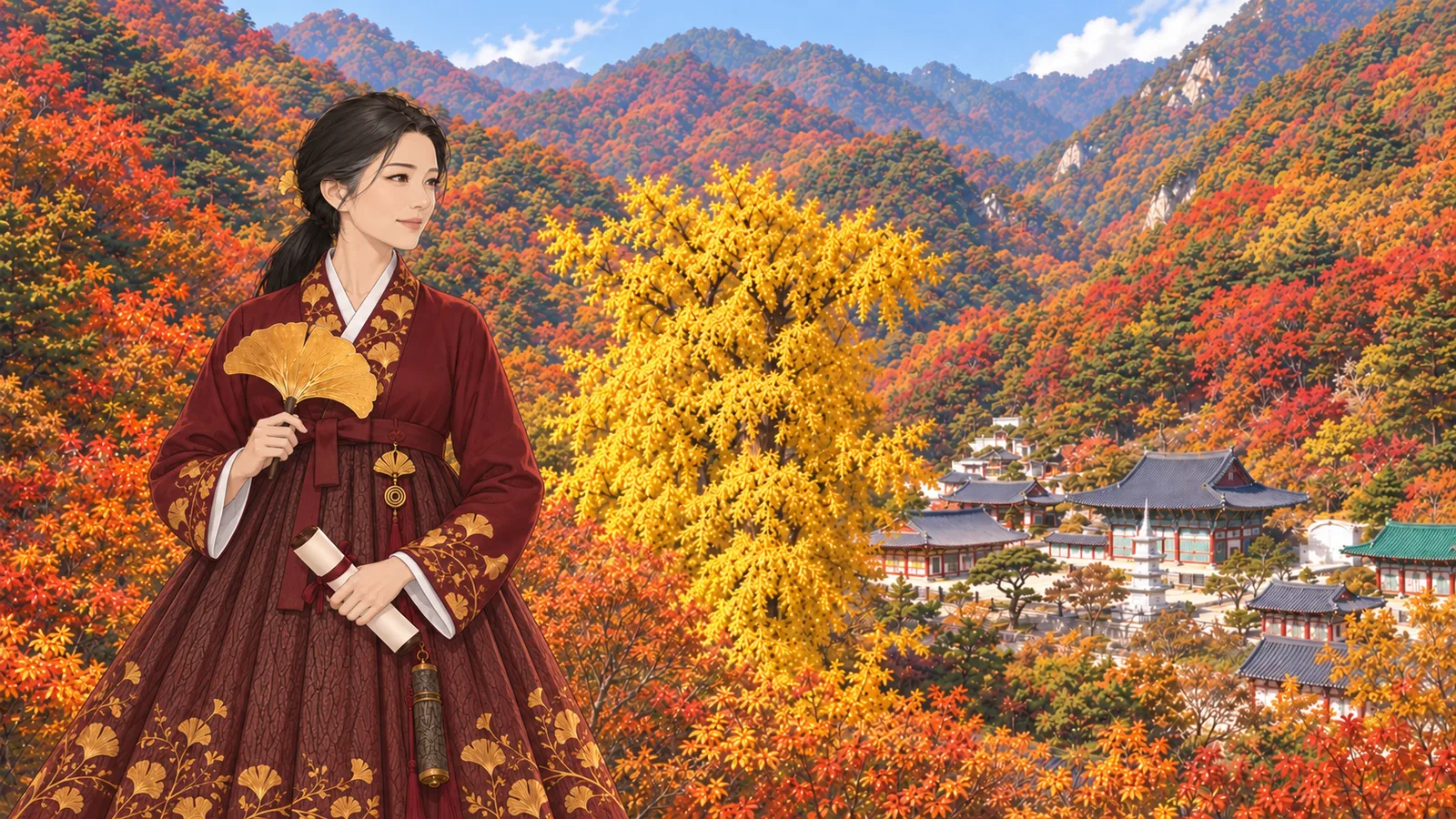
The ginkgo tree in the grounds of Yongmunsa Temple in Yangpyeong, Gyeonggi-do, was designated a Natural Monument in 1962 (designation date 7 December 1962, per the Korea Heritage Service portal). The Gyeonggi Historical and Cultural Heritage Institute's commentary estimates its age at 1,100 years and presents it as the oldest living ginkgo in Korea, 41 m tall with a trunk circumference of 14 m at chest height. Legend has it that Crown Prince Maui of Silla planted it on his way to Mount Geumgang, grieving the fall of his kingdom, or that the staff of the monk Uisang took root and came to life. It is also said that during the reign of King Sejong of Joseon it was granted the rank of a senior court official (dangsang jikcheop). The official commentary presents all of these as legends. It is also said that when Japanese troops set fire to the temple during the Jeongmi Righteous Army uprising, only this tree escaped harm, and it has served as a guardian-king tree (cheonwangmok) in place of the burned Four Heavenly Kings Hall. The commentary notes that the tree stands beside the stairs up to the main hall (Daeungjeon) and that its trunk splits into three at about 12 m.
Sources — 6 records and legends
Records are facts written in the sources. Legends are stories handed down over time. Sources are in Korean.
Record
- The Korea Heritage Service portal lists the Yongmunsa ginkgo in Yangpyeong as a Natural Monument, with designation date 7 December 1962, location 626-1 Sinjeom-ri, Yongmun-myeon, Yangpyeong-gun, Gyeonggi-do, owner Yongmunsa Temple of the Jogye Order of Korean Buddhism, and manager Yangpyeong-gun.
국가유산포털(국가유산청) — 양평 용문사 은행나무 · checked 2026-09-24
- The Gyeonggi Historical and Cultural Heritage Institute's commentary notes that records of the tree's height differed: 63.6 m (1919), 60 m (1962) and 67 m (2000). A recent laser rangefinder measurement gave 41 m, and the commentary takes this to mean that earlier measurements were inaccurate, not that the tree had shrunk.
경기역사문화유산원(경기문화재단) — 양평 용문사 은행나무 · checked 2026-10-05
- The Gyeonggi Historical and Cultural Heritage Institute's commentary says the trunk splits into three at about 12 m above the ground and has a large knob-like growth near the base. According to the temple, the tree still bears about two to three gama (sacks) of ginkgo nuts. It stands beside the stairs up to the main hall, and because a stream runs close by, many mosses and ferns grow on its bark.
경기역사문화유산원(경기문화재단) — 양평 용문사 은행나무 · checked 2026-10-05
Legend
- The Gyeonggi Historical and Cultural Heritage Institute's commentary estimates the Yongmunsa ginkgo at 1,100 years old and presents it as the oldest living ginkgo in Korea, listing it as 41 m tall with a trunk circumference of 14 m at chest height. As legend, it says Crown Prince Maui planted it with his own hands on his way to Mount Geumgang, or that the staff Master Uisang used to walk with was stuck in the ground and came to life. It also includes the story that the tree was granted the rank of dangsang jikcheop during the reign of King Sejong of Joseon.
경기역사문화유산원(경기문화재단) — 양평 용문사 은행나무 · checked 2026-09-24
- The Gyeonggi Historical and Cultural Heritage Institute's commentary tells a story that King Gyeongsun came to visit his teacher, Master Daegyeong, and planted the tree. It also tells that when Japanese troops set fire to the temple during the Jeongmi Righteous Army uprising, only this ginkgo escaped, and that it has since served as a guardian-king tree in place of the burned Four Heavenly Kings Hall. And it tells that in King Sejong's time the tree was granted the rank of dangsang jikcheop, equivalent to the senior third rank or higher.
경기역사문화유산원(경기문화재단) — 양평 용문사 은행나무 · checked 2026-10-05
- The Gyeonggi Historical and Cultural Heritage Institute's commentary tells that when a saw was set to the tree, blood gushed out, the sky darkened and thunder rolled, so the cutting was abandoned. It also tells that the tree cried out loudly when great misfortune befell the country, that a large branch broke when King Gojong died, and that it made strange sounds at Liberation on 15 August and during the Korean War.
경기역사문화유산원(경기문화재단) — 양평 용문사 은행나무 · checked 2026-10-05
Spot a mistake?Tell usRead in Korean