
The First Maples to Become a Natural Monument: The Munsusa Maple Grove in Gochang
Place · Munsusa Temple approach, San 190-1 Eunsa-ri, Gosu-myeon, Gochang-gun, Jeollabuk-do
Visit this tree
Japanese Maple Forest of Munsusa Temple, Gochang
At a glance
- Tree
- Maple Grove of Munsusa Temple, Gochang
- Age · era
- Munsusa founded in 644, designated a Natural Monument in 2005
Story
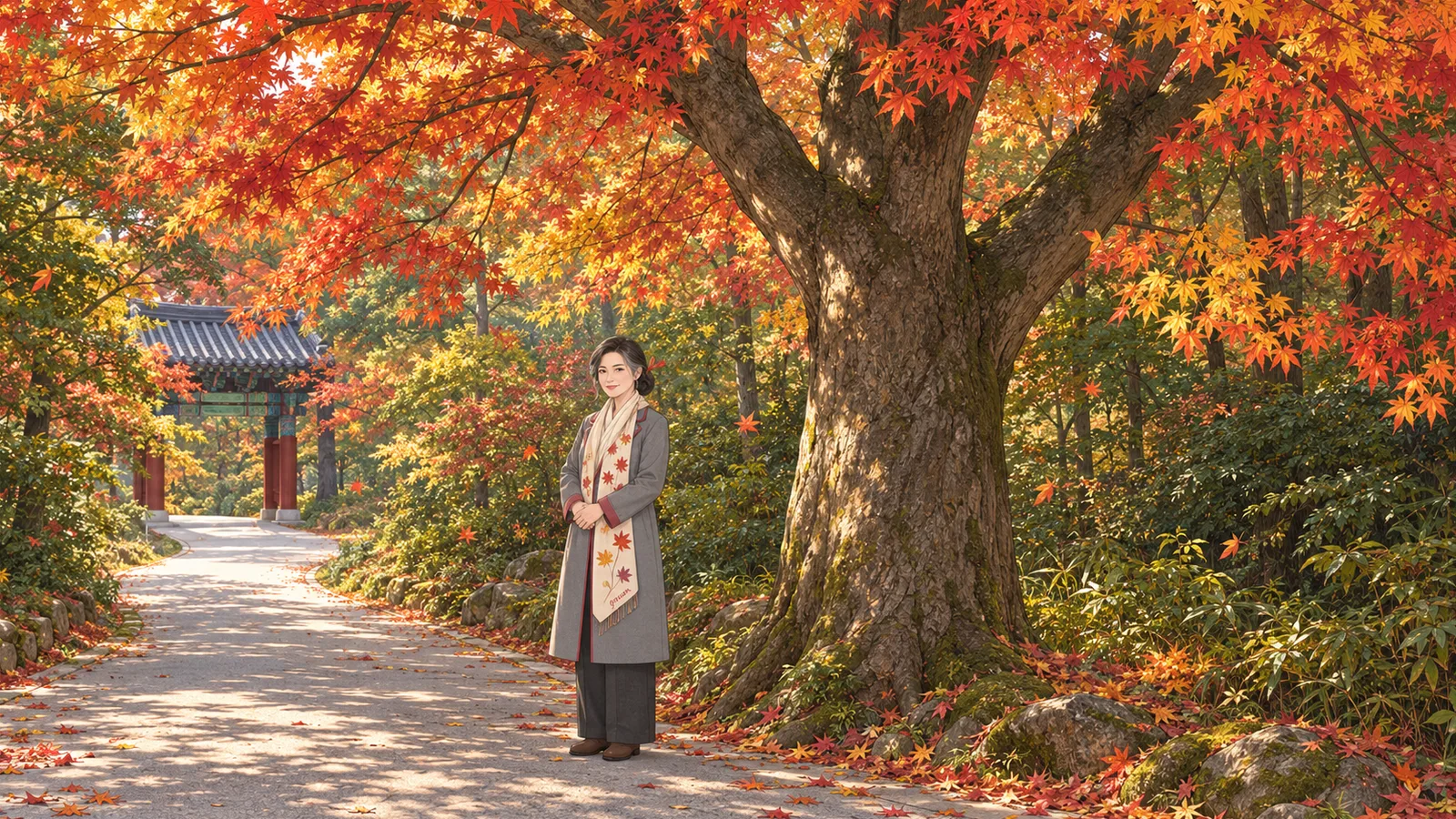
When it designated the maple forest around Munsusa Temple in Eunsa-ri, Gosu-myeon, Gochang-gun, Jeollabuk-do as Natural Monument No. 463 on 9 September 2005, the Cultural Heritage Administration (now the Korea Heritage Service) said that "maples have never before been designated a Natural Monument" and that the forest has very great historical and scenic value and ecological representativeness. Along about 80 m of approach from the Munsusa parking lot to the temple, partway up Munsusan (also called Cheongnyangsan), maples estimated at 100 to 400 years old grow on both sides, including old trees with a chest-height circumference of up to 2.96 m. The press release said this is a forest that has been protected as the temple forest of Munsusa, built in the 4th year of King Uija of Baekje (644), and the Encyclopedia of Korean Culture writes that this is "presumed". The encyclopedia records a folk custom of cutting maples on Gyeongchip day to drink the sap that flowed out, which led to many maples being cut, and records that the reason there are no legends about maples among Korea's sacred trees is said to be that the Japanese cut and carried off almost all of them.
Sources — 3 records and legends
Records are facts written in the sources. Legends are stories handed down over time. Sources are in Korean.
Record
- The Cultural Heritage Administration announced that it designated the maple forest around Munsusa Temple in Eunsa-ri, Gochang, as Natural Monument No. 463 on 9 September 2005. In the forest on both sides of the approx. 80 m approach from the Munsusa parking lot to the temple (estimated 100 to 400 years old) are old trees with a chest-height circumference of up to 2.96 m. It judged this a representative maple forest protected as the temple forest of Munsusa, built in 644, and of very great value because maples had never been designated a Natural Monument until then.
문화재청(현 국가유산청) 보도자료 '"고창 은사리 단풍나무숲" 천연기념물 지정' (2005-09-09) · checked 2026-10-04
Legend
- From the Encyclopedia of Korean Culture, "Maple Forest of Eunsa-ri, Gochang": maples estimated at 100 to 400 years old grow naturally around the approach to Munsusa Temple in Gochang, Jeollabuk-do, and the forest was designated a Natural Monument on 9 September 2005. It is recorded as presumed to have been protected as the temple forest of Munsusa, built in 644 (the 4th year of King Uija of Baekje). As folk custom, a tradition is introduced that many maples were cut on Gyeongchip day so people could drink the flowing sap (dangpungmul).
한국민족문화대백과사전 '고창 은사리 단풍나무숲' · checked 2026-09-30
- The Encyclopedia of Korean Culture writes that this forest is presumed to have been protected as the temple forest of Munsusa, built in 644, and records that the reason there are no legends about maples among Korea's sacred trees is said to be that the Japanese cut and carried off almost all of them.
한국민족문화대백과사전 '고창 문수사 단풍나무 숲' (집필 2015 김용훈, 최종수정 2024-06-13) · checked 2026-10-04
Spot a mistake?Tell usRead in Korean